Mathematics and Statistics Colloquium
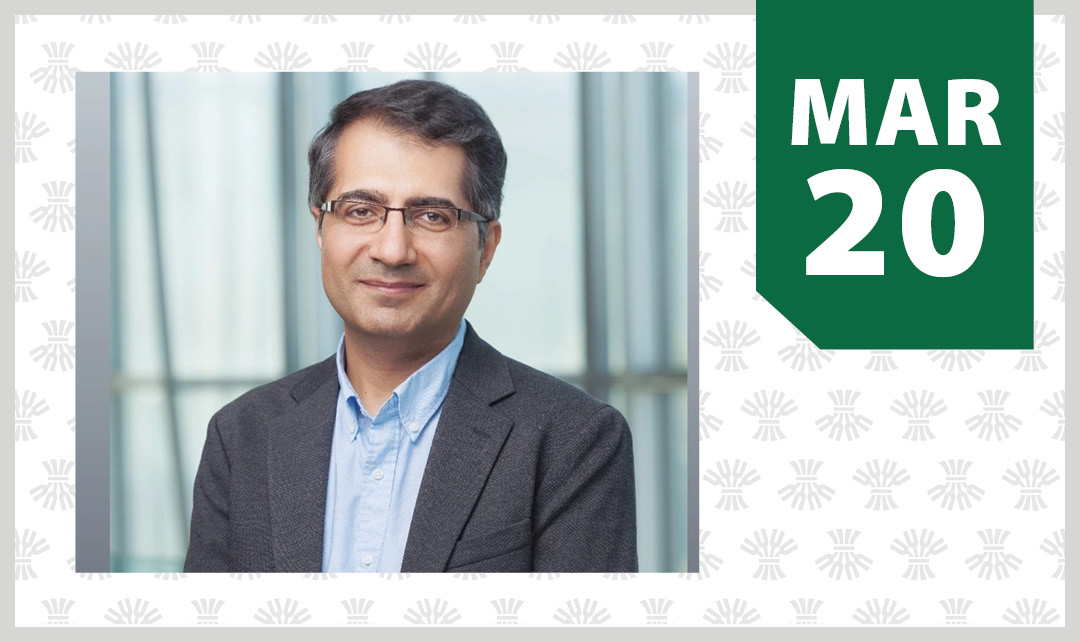
“Computational Immunology: A Solution to Accelerate Vaccine Design” by Dr. Zahed Khatooni (PhD)
Date: Friday, March 20
Time: 3:30 pm
Location: Room 206 Arts Building, 9 Campus Dr., Saskatoon
Free and open to the public
About this event
Computational Immunology: A Solution to Accelerate Vaccine Design
Speaker: Dr. Zahed Khatooni, VIDO, University of Saskatchewan
Infectious diseases such as tuberculosis, African swine fever virus (ASFV), and highly pathogenic influenza viruses continue to affect millions of people and animals worldwide. Developing vaccines or antiviral drugs against these pathogens traditionally requires many years of experimental work. In my research, we use computational immunology to help accelerate this discovery process.
Using modern computational tools, we can predict the three-dimensional structure of important proteins from viruses or bacteria, even when their structures have not been experimentally determined. Approaches such as homology modeling and AI-based protein structure prediction allow us to reconstruct likely protein conformations and understand how these molecules function. Once we have structural models, we can simulate how potential drugs or immune targets might interact with them.
To do this, we apply a range of computational techniques that rely on different mathematical and algorithmic frameworks. For example, molecular docking algorithms are used to predict how small molecules may bind to a protein target, while molecular dynamics simulations model the motion of atoms over time to evaluate the stability of these interactions. Different scoring functions, optimization methods, and sampling strategies allow us to screen thousands or even millions of potential molecules computationally before moving to laboratory testing.
In this talk, I will discuss how these computational approaches can support faster discovery of antivirals and vaccines for pathogens such as Mycobacterium tuberculosis, HN influenza viruses, and African swine fever virus. I will also highlight how integrating mathematical modeling, computational prediction, and experimental validation can help accelerate responses to major infectious disease challenges.
The Colloquium Committee gratefully acknowledges that our colloquium series is supported in part by the Pacific Institute for the Mathematical Sciences.
Info: colloquium@math.usask.ca
Upcoming Events

Threads of Time: An Asian Heritage Month Exhibition
May 4-22, 2026
Xiao Han curates this exhibition bringing together six Saskatoon-based emerging artists connected to USask
Strayhorn: The Quiet Revolutionary
May 23, 2026
USask music professor Dean McNeill is artistic director of the SJO