Appendix C5 - Indigenous Leaning Requirement
Survey Results
Primary Research – Survey
Indigenous Requirement Survey
FIELDING DATES MARCH 24 – APRIL 6, 2017; NUMBERS MAY NOT ADD TO 100% DUE TO NON-RESPONSE
Students
- 1,019/7,909 (13% response rate)
- 10% indigenous, 88% non-indigenous
- 5% international student
- 29% male, 67% female, 2% other
- Range of years:
- 27% 1st yr
- 27% 2nd yr
- 22% 3rd yr
- 16% 4th yr
- 8% 5+ yr
Faculty
- 95/292 (33% response rate)
- 9% indigenous, 91% non-indigenous
- 58% male, 38% female, 3% other
- Range of ranks:
- Assistant 24%
- Associate 35%
- Full 41%
UGSO Staff
- 14/24 (50% response rate)
- 100% non-indigenous
- 21% male, 79% female
Overall, what are your suggestions for how the College of Arts and Science implement its Indigenous requirement to best meet the College’s goal that all students “cultivate an understanding of and appreciation for the unique sociocultural position of Aboriginal peoples in Canada”?
Theme: go beyond high school curriculum
“We have been learning about aboriginal history since elementary school so don't tell us the same thing.” - student
“Look at current elementary and high school curriculums concerning the subject and then base your course content around different aspects of Indigenous culture. I feel like something that turns students off from the these classes is that they aren't engaging because the same stuff is taught for eight to ten years.” – student
“you learn this from elementary to grade 12 so make sure that is you are going to force this class on university students too that it is a new and unique course that will encourage excitement around the topic” - student
Theme: incorporate student interest areas
“there could be classes about indigenous art, music, dance, and history that students could take. These classes all have the potential to teach students about colonialism, assimilation and struggles past in present but will give students a medium to be marked on their understanding in a way that benefits them most.” - student
“The content must be of interest to them and/or potentially applicable to their education and/or future.” – UGSO staff
“Make sure that students are interested in the indigenous class that they are taking. For example allow them to take a history of Indigenous people, indigenous politics, indigenous commerce and finance, indigenous land rights, that sort of variety so that it relates to any degree.” – student
“The courses should be catered and fit into the students' broad interests. For example, a student who is interested in the sciences would likely be more interested in a course on Indigenous peoples and the environment.” - faculty
Theme: include interaction and engagement
“Create a space that allows teachers and students to create a meaningful dialogue about the course” - student
“Have the classes use individual engagement between the professor and the students as much as possible.” – student
“Make sure the classes are more interactive and feature a lot of discussions and questions so that stereotypes and misconceptions can be cleared.” - student
Theme: ensure options in scheduling
“they must also have a variety of options so they aren’t caused undue hardship in trying to schedule this requirement. Please keep this in mind when considering whether or not to stipulate that this requirement be met at a certain point in a student’s program. There are many, many degrees where this would cause a lot of problems because senior courses in the major are offered once per year or once every two years at a set day and time.” – UGSO staff
“offer various classes so people have a choice. I wanted to take an indigenous studies class, but it is at a time frame that conflicted with other things I do at the university.” - student
“offer numerous times for students to take the class.’ – student
Theme: beware unintended negative results
“This will only serve to make people more resentful towards Indigenous peoples, not less. …. it will harm relations with Indigenous communities, not help them.” - student
“Students who are forced to take a single Aboriginal studies class they are not interested in may start to view Aboriginal people in a negative light, which makes this entire process counterproductive.” - student
“The most crucial consideration is how to present this content without creating resistance. To generate understanding, we must respect diversity of perspective. We must be able to cultivate and preserve sympathy in the student population.’ – faculty
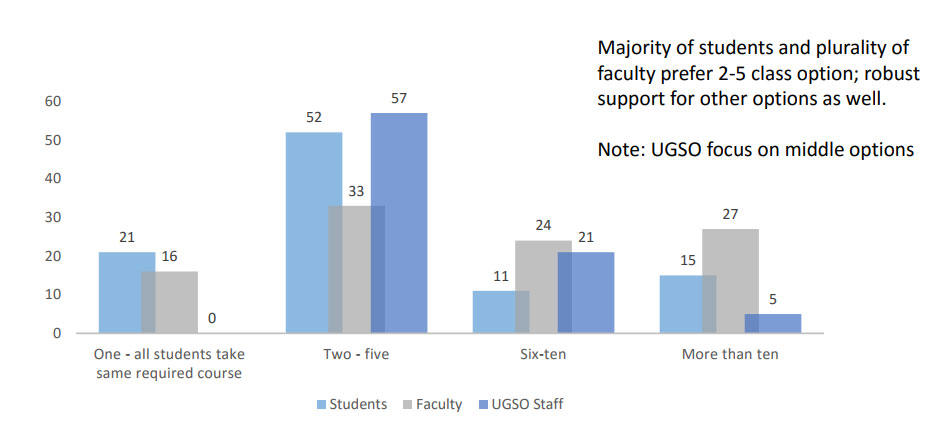
In your opinion, many different course options should students be able to choose from to complete the Indigenous requirement? (%)
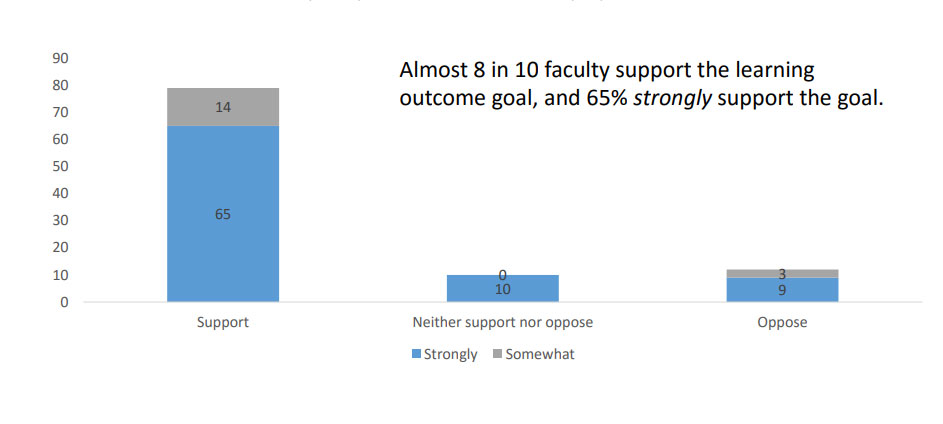
Faculty: Please rate your level of support for the learning outcome goal that all students “cultivate an understanding of and appreciation for the unique socio-cultural position of Aboriginal peoples in Canada”. (%)
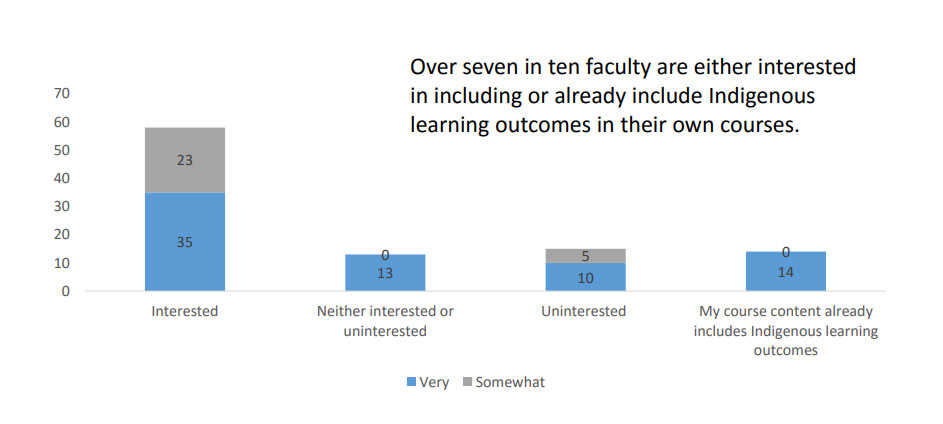
Faculty: How interested are you in including Indigenous learning outcomes in your own courses if given appropriate support and/or training? (%)