Receptaculite
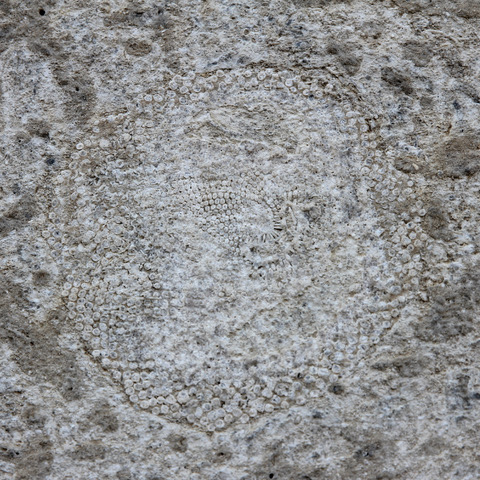
Receptaculites are a big palaeontological mystery. They were originally believed to be sponges and they are also called sunflower corals but they are likely neither. They are most commonly accepted to be calcareous green algae but there is still debate about this.
Receptaculites are now extinct. They grew in a large circular colonial structure that was flat or gently domed, and made of aragonite pillars with square or diamond-shaped heads. They have a double-spiral structure of intersecting clockwise and counter-clockwise patterns, similar to the spiral structure we see in pinecones and sunflowers.
Solitary Rugose Corals
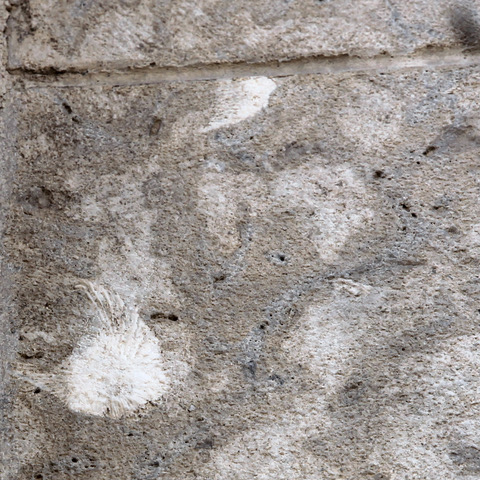
Solitary rugose corals are extinct animals. They grew separately from one another and they are also called horn corals because that’s what they look like!
The coral skeleton was made of calcite and so the fossils we see are white. The animal inside was a tiny sea anemone like creature called a polyp that had a mouth and probably stinging tentacles. They were technically carnivores but are often called microcarnivores because their prey was so small.
Rugose means wrinkled, and the corals had wrinkled walls. You can see their daily growth by tiny lines in the wrinkles the same way you can count years in tree trunks. Bescause of this, we can measure how the Earth’s rotation has been slowed down over time by the moon's gravitational influence. Rugose corals from just after the time that Tyndall Stone was created show that there were 420 days in a year back then!
If the fossil is cut horizontally across the coral, we see a circular shape with lines called septa radiating from the centre. If the fossil is cut vertically, we can see these same septa elongated in a longer shape.

Nautiloids
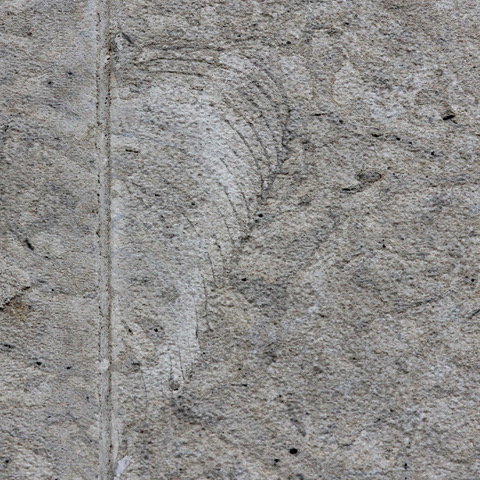
Nautiloids are cephalopods, a type of mollusk. They are related to the modern squid, octopus, cuttlefish, and nautilus. Ammonites, a popular fossil for collectors, are also cephalopods but they lived later, from 240 million years ago to 66 million years ago.
All nautiloids have internal chambers and a siphuncle which is a tube connecting the chambers. Using this tube, they can change their buoyancy to move up and down and act like little water pistols to move through the water horizontally. When Tyndall Stone was formed, they were the top predator in the oceans. Some nautiloids were over 5 meters long!
Nautiloid shells came in lots of shapes: some were straight, some were curved, and some were coiled. They were made of aragonite which dissolved or re-crystalized over time. These molds were then preferentially filled by mud that became dolomite, just like the Tyndall Stone burrows, and that’s why the fossils we see are brown.

Gastropods
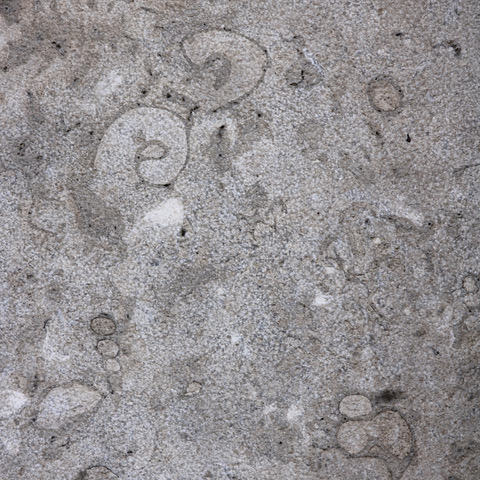
Gastropods are invertebrate mollusks and we know them today as snails and slugs. The ones in Tyndall Stone were marine animals and they grew to be quite large.
Gastropods are very diverse. There are tens of thousands of living species today and at least 15,000 fossil species. The first big gastropods appeared around 495 million years ago and so they have had a very long and rich history on Earth! They are often used in palaeontology and biology research to study evolution, ecology, and physiology.
Their shells were made of aragonite which dissolved or re-crystalized over time. These molds were then preferentially filled by mud that became dolomite, just like the Tyndall Stone burrows, and that’s why the fossils we see are brown.