News & Events
USask computer science student builds skills, community in open-source coding summer program
Posted on 2026-10-30 in Students & Campus Life
By Kristen McEwen
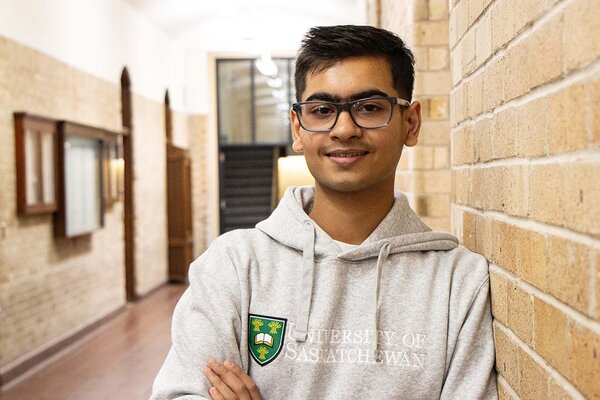
University of Saskatchewan computer science student Kartik Mittal had the opportunity to join a global community shaping the future of open-source software development.
Mittal joined a project in Google Summer of Code, a longtime annual program that encourages new contributors to join ongoing 12-week coding projects. Students are paired with mentors within projects to help coding move forward. A total of 1,141 contributors from 131 countries were accepted to the 2026 GSoC program.
"I was so excited," Mittal said. "The reason for (joining GSoC) was that it gave me a good platform to make bigger contributions than I could have on my own.
"It gave me a direct opportunity to work with mentors, the real users who are using the software," he added. "I had a real mentor and (access to) a lot more tools that I can use and contribute more to open-source."
Mittal was part of the OpenRoad-MCP project, which uses open-source software to design the physical layout of computer chips. The software used in designing computer chips is very expensive and owned by large companies, Mittal explained.
"Designing a chip means turning a logical description into billions of transistors and wires—all placed precisely. The software that does this is called EDA – Electronic Design and Automation," Mittal said. "Designing a chip is incredibly complex and the software used is hard to learn. OpenRoad is creating a free, open-source tool for the physical design of chips."
The OpenRoad-MCP project connects OpenRoad to artificial intelligence (AI) assistants like Claude, ChatGPT, Cursor or Co-Pilot, he added.
"An engineer can ask in plain English, 'Why is my chip failing timing, and can you fix it?' The AI runs every command on the real design, reads results and reports back," he said.
Mittal was excited to expand his skillsets in working with AI to contribute to a worldwide project designing computer chips.
"I believe, because of AI, every student has a lot more opportunity to explore as far as they can. A lot of students right now are worried about AI – that AI is going to make their skills less valuable.
"My experience this summer was the opposite. AI did not replace what I could do, it raised the ceiling on what I could attempt."
Mittal's contributions included helping turn OpenRoad-MCP from a prototype into a finished tool for engineers to use. He downloaded the source code and installed extra programming tools by hand. He wrote an automated process that compared the new version of the software against the original and alert if there were any differences. Mittal wrote more than 650 tests that run when there are changes to the software. He expanded the tool from 10 to 15 capabilities so an AI assistant can run entire stages of chip-design processes, track progress and pull up resulting reports.
"I used AI as a collaborator to learn faster, but I made sure I understood every piece of what I was building," Mittal said.
The finished version is in the official public catalogue of AI connectors where developers can find and install it, he said.
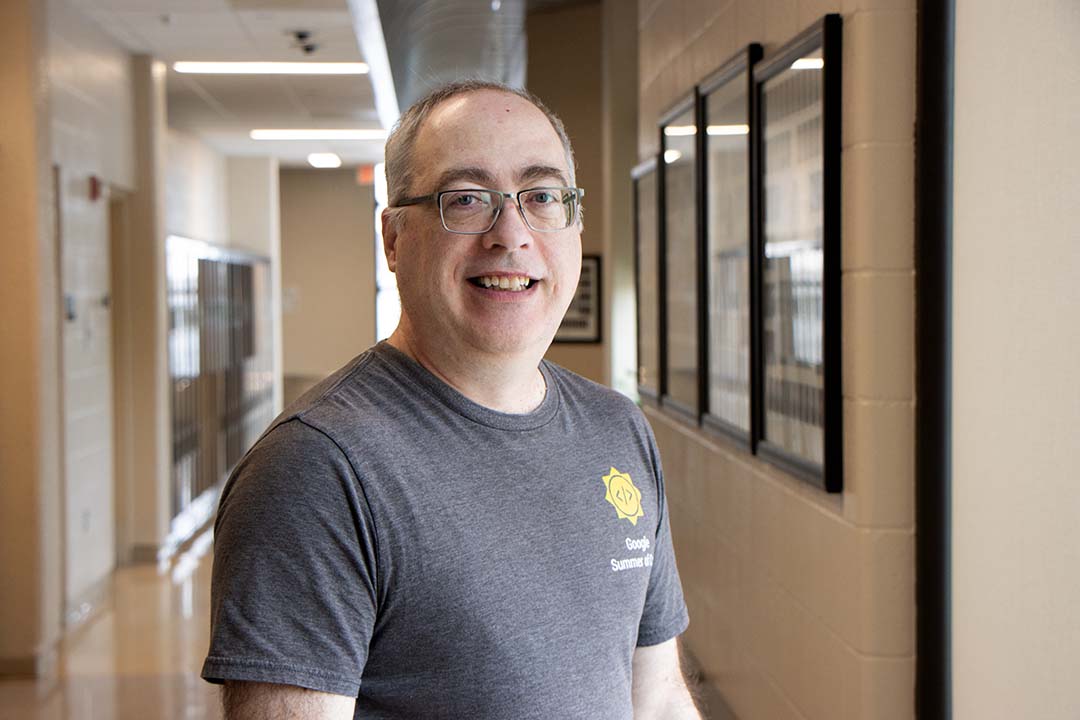
Greg Oster, the technical team lead in the Department of Computer Science, has been following GSoC since it began in 2005.
"The idea is not to pay people to do certain work, the idea is to get people involved in a community," Oster said.
This year, he was a mentor for a student working on a project within The NetBSD Foundation, which is comprised of more than 200 contributors from around the globe.
Oster has been using NetBSD since 1993 and later became a contributor in 1998. NetBSD is an open-source operating system, similar to Linux operating systems often found in web servers and Android devices. Open-source operating systems use software where the source code is available to the public to view, modify and share. Oster is part of the project focusing on improving RAIDframe (Redundant Array of Independent Disks).
"It's part of growing that community where you're looking for somebody else who would want to take over when I want to step back. (My area) is such a complicated part of the project, not just anybody is going to be interested enough to step in," Oster said.
Developers within the NetBSD Foundation do not allow AI to be used to create code. One of the rules for the group is, "only commit code that you're familiar with," Oster said.
When using photos or music available to the public, there are often requirements to properly credit the creators. Similarly, some open-source code may also have specific requirements for crediting the original source code. AI can sometimes pull open-source code without providing its sources, Oster said.
"We're not necessarily dead set against the use of AI ... but the problem we have right now is that the large language models pull in everything," Oster said. "There's a lot of debate going on in terms of how and what we should be doing with (AI)."
As a mentor, Oster has found that the annual GSoC summer program has helped him connect with other members of the global NetBSD community.
This year, NetBSD mentors met with students online for a series of regular meetings every two weeks. Instead of only communicating through email or forums, everyone was able to meet over video chat.
"Having those meetings, I think – not only were the people being mentored more engaged – but I think it also had us mentors more engaged."
Earlier this year, Mittal founded an Amazon Web Services (AWS) Student Builder Group at USask, where students can learn cloud computing and AI by building projects together.
“Open source showed me how much you can learn when people share what they know,” Mittal said. “I wanted to create that same kind of space for students here at USask.”
As a computer science student, Mittal is also working at Siemens EDA in Saskatoon via the Computer Science Professional Internship Program through the Department of Computer Science.
"I believe that students have something that professionals often don't," he said. "They have time to explore, permission to be a beginner, and communities that want to help them.
"My suggestion (to students is) pick something you are curious about and start contributing in small ways."
Related Articles
USask Huskies celebrate 2025-26 Academic All-Canadians
Posted on 2026-10-07
Student-athletes were recognized for academic excellence
Why this Sask. university student lies down on the floor in public
Posted on 2026-10-05
Auckland Nickolayou has gained a following for his content about managing social anxiety
USask archaeology graduate honours relatives through research at residential school sites
Posted on 2026-10-01
Micaela Champagne (BSc’22), a Cree/Métis woman who earned a Bachelor of Science in 2022, is CEO and co-founder of askîhk Research Services

Greystone Theatre: Climate Collabatorium
Posted on 2026-09-28
A newly created theatre piece developed in partnership with northern Saskatchewan communities

Greystone Theatre: The History of the Village of Small Huts Part 8: World War II
Posted on 2026-09-28
Greystone Theatre’s third production of the 2026/27 season
Greystone Theatre: Letters of another Island
Posted on 2026-09-28
Greystone Theatre’s second production of the 2026/27 season