News & Events
Mathematics and Statistics Colloquium
Posted on 2025-03-10 in Science & Technology, Research, Scholarly & Artistic Work
Mar 28, 2025

Date: Friday, March 28
Time: 3:30 pm
Location: Arts Building Room 206, 9 Campus Dr., Saskatoon
Free and open to the public
About this event
A survey of results in explicit prime number theory
A talk by Dr. Habiba Kadiri (PhD), University of Lethbridge
This talk will first provide a (non-exhaustive) survey of explicit results on zero-free regions and zero densities of the Riemann zeta function and their relationship to error terms in the prime number theorem. This will be extended to Dirichlet L functions and Dedekind zeta functions, where new challenges arise with potential exceptional zeros. We will explore estimates for the error terms for prime counting functions across various contexts, including number fields.
The Colloquium Committee gratefully acknowledges that our colloquium series is supported in part by the Pacific Institute for the Mathematical Sciences.
Info: colloquium@math.usask.ca
Related Articles
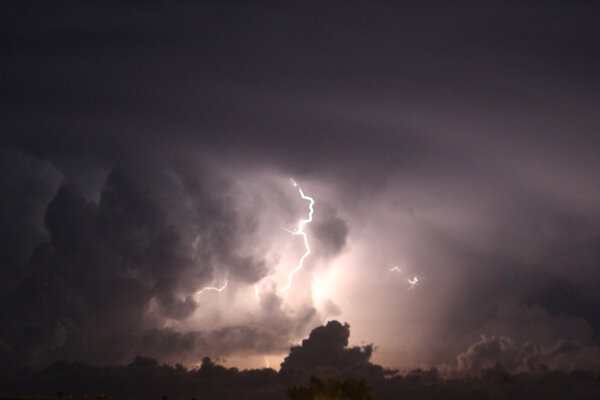
Transforming weather forecasting in Canada
Posted on 2026-10-21
WxAlliance will combine machine learning and traditional models to help governments, emergency responders better prepare for extreme conditions
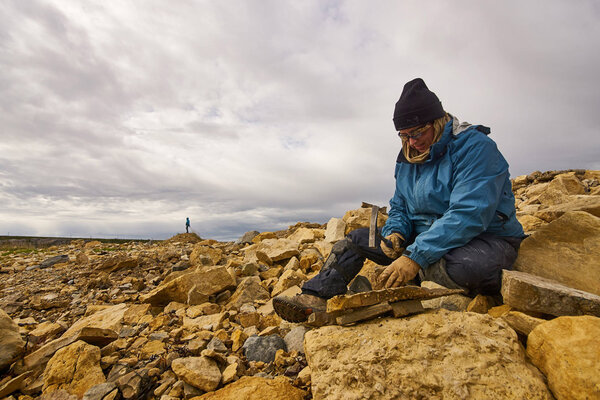
Arts and Science contributes to USask’s strong showing in international ranking
Posted on 2026-09-21
Research in water, Earth sciences and chemistry are among the highlights
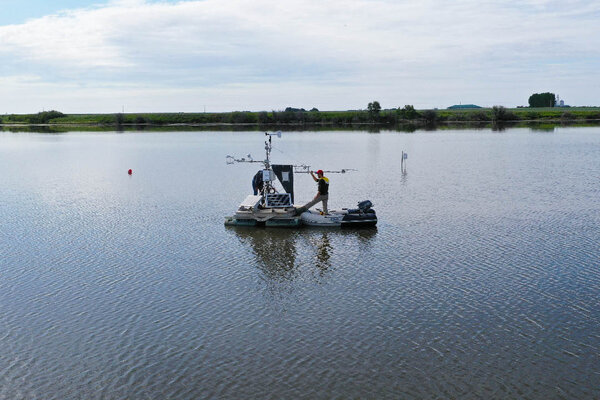
USask tops Canada, reaches top 10 worldwide in water research
Posted on 2026-09-15
The University of Saskatchewan has cracked the top 10 worldwide for water research and scholarship in a prestigious international university ranking