Watercolor I: Basic Techniques and Fundamentals
In-person with Colleen Watson-Turner
Course Description
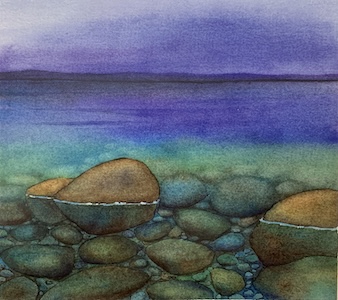
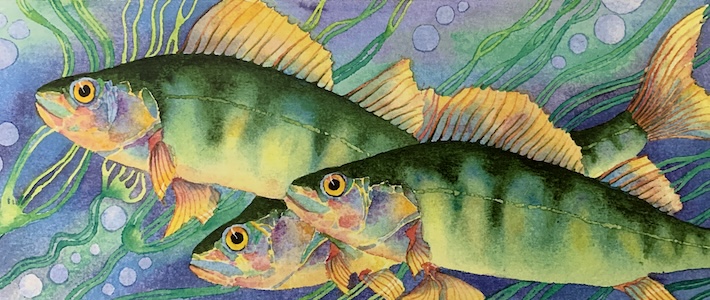
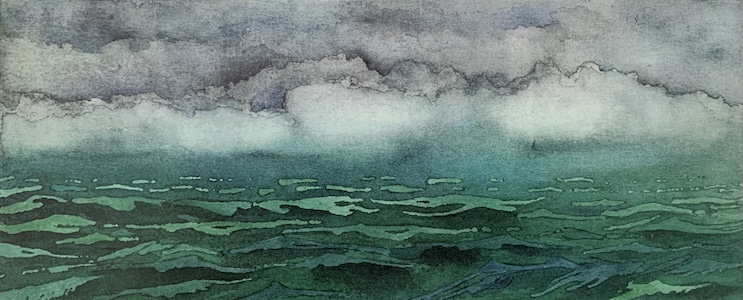
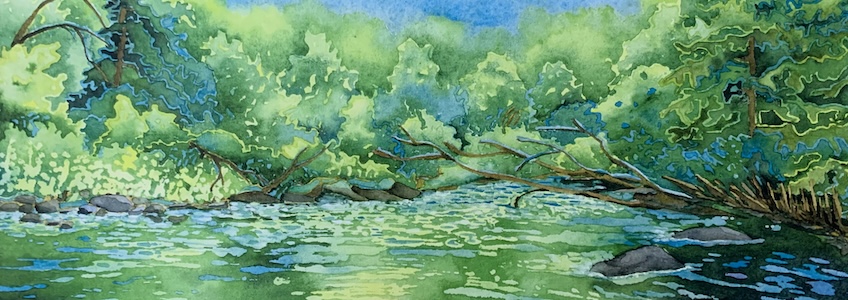
Discover the bold and beautiful basics of watercolour painting. There will be an emphasis for the duration of the course on skill development including water control, brush use, colour-mixing/application and watercolour techniques. With practice students will expand their perceptions of what watercolour painting is, and what it can be, by exploring light, precise touches, broad, loose strokes, experimenting with thin pastel washes and the application of bright, saturated colour. We will learn to chase the light, dig into the shadows, and give the midtones punch through targeted exercises. With demonstration and practice (practice, practice), we will move towards designing and painting in ways that reflect individual subjects and tastes. By the end of this course, students will have completed several watercolour paintings and will have a book of watercolour terms/techniques and practice projects they have created for future reference.
Course Fee: $395 (supplies not included)
Syllabus
- Organizing a personal paint station
- Laying out a palette and labeling according to colour, temperature and transparency/opacity
- Preparing the paper
- Brush usage (round and flat) and expressive mark making with brushes and implements
- Water control (managing water-to-pigment ratios)
- Watercolour techniques (flat, graded, and variegated washes alongside wet-on-wet, wet-on-dry, and dry-brush methods)
- Creating a 6 colour mixing grid
- Creating a 12 colour mixing grid
- Avoiding mud-making and overworking
- Value studies, mapping light, mid-tones, and shadows
- Hard and soft edges
- Using resists (masking fluid, tape, crayon)
- Creating texture (salt, splattering, plastic wrap)
- Glazing, wet over dry
- Composition guidance and how to begin a painting
- Practice projects
- Painting projects
Supplies
- Budget Range (Winsor & Newton Cotman Tubes)
- Lemon Yellow Hue
- Cadmium Yellow Deep Hue
- Permanent Rose
- Cadmium Red Hue
- Intense Blue (Phthalo Blue)
- Ultramarine
- Intense Green (Phthalo Green)
- Cadmium Orange Hue
- Payne's Gray
- Yellow Ochre
- Burnt Sienna
- Burnt Umber
OR
- Premium Range (Winsor & Newton Professional Tubes)
- Winsor Lemon
- Winsor Yellow Deep
- Permanent Rose
- Winsor Red
- Winsor Blue (Green Shade)
- French Ultramarine
- Winsor Green (Blue Shade)
- Winsor Orange
- Payne's Gray
- Yellow Ochre
- Burnt Sienna
- Burnt Umber
Additional Supplies:
- 1 sheet of 20 × 30-inch cold press, 140 lb watercolour paper (Arches)
- 1 pad of 9 × 12-inch, 30 pages, coil bound, Canson cold pressed, 140 lb watercolour paper
- Medium round watercolour brush, size 8 or size 10—needs a nice point
- ½-inch or 1½-inch flat watercolour brush
- Palette box with at least 12 colour wells and a mixing area
- Roll of painter's tape or masking tape
- 12 × 14-inch piece of Masonite/hardboard or something similar in size
- Pentel Hi-Polymer Eraser or something similar
- HB pencil and sharpener
- Plastic palette knife or an old credit card
- Box of facial tissue, any brand
- Soft cotton rags or a roll of paper towel
- Small container of coloured (not clear) masking fluid
- Small box of toothpicks
- Small spray bottle
The two choices of palettes are similar in hue and temperature. We are going to work with a split primary palette, which will allow for a wide range of colour mixing, one of the important features in this class.
Students are welcome to start collecting photographs of subjects they would like to paint. The instructor will also have photographs available for students to use as references.
For a brief list of frequently used suppliers, please see Where can I purchase supplies? on our FAQ page.